Horus 3 min read
Why do I need Horus if I have ChatGPT?

You can ask ChatGPT for ten reporters to pitch and get a convincing list in seconds. Before using it, you'll probably check the names, read their recent work, and find that some fit better than others. That checking can take longer than producing the list.
Horus gives your assistant a head start: more than 300,000 stored stories, prebuilt reporter profiles, and tools to read the evidence behind a recommendation. Your team can use the same research in a browser.
The problem with a plausible shortlist
Consider a familiar failure: an assistant recommends someone because they wrote about your category last year. They left that publication six months ago. Or they still work there, but now cover a different beat.
Browsing can catch those changes. ChatGPT and Claude can do careful research when you give them good instructions and enough time. A quick request for “top journalists covering AI” often produces something much less useful: familiar names with explanations that sound more specific than they are.
You'll also miss people that way. A specialist newsletter author who has written about your exact problem for months may be a better target than the prominent tech reporter the model remembers.
What Horus gives the assistant
Horus collects coverage over time, so the research can start with what people have published. Reporter profiles pull out recurring interests and angles from that work. Where a profile is available, the assistant doesn't have to infer everything from a fresh web search.
The distinction between a beat and an angle matters. The profile below describes a reporter who covers AI companies, but also identifies a habit of testing company claims against technical or internal evidence. That tells you something about the pitch they might find useful.
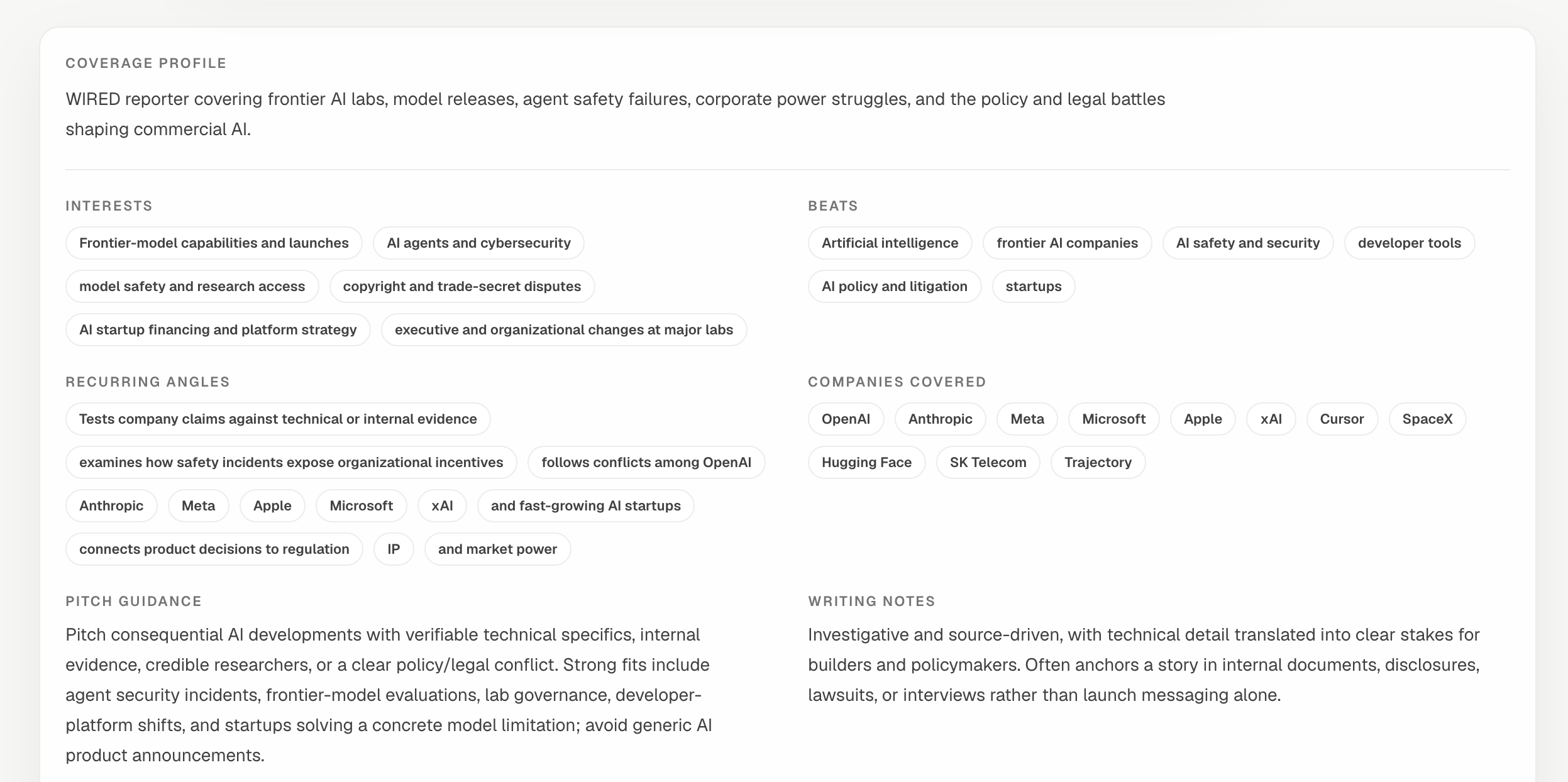 A profile gives the assistant more to work with than a name and a beat label. View full size ↗
Profiles still need judgment. Read the newest relevant stories and check current affiliations before outreach. Horus gives you evidence to investigate; it can't guarantee that a reporter's next assignment will resemble their last one.
Ask a question that forces the research
With Horus connected to a compatible assistant, try:
Michael Nuñez · VentureBeat. His August 13 report on Writer examines how repeated agent calls drive spending. Offer cost per completed task, including retries. A study limited to subscription prices would add less.
Anirban Ghoshal · InfoWorld. His August 20 story on AI coding costs includes the human work needed to repair output. Your study fits if it separates model charges from review and rework time.
Then share what your client can offer: a study, a customer willing to speak, a technical result, or a spokesperson with firsthand experience. Ask which targets remain convincing.
This is where the conversation becomes useful. You can challenge the shortlist: “These three mostly cover funding. Who has written about implementation?” The agent can go back to the stories instead of defending its first answer.
Do you need both?
For a one-off question about two publications, browsing may be enough. Horus earns its place when the research repeats across clients and campaigns, or when several people need to read and reuse it.
Keep ChatGPT or Claude for the thinking and drafting you already do there. Connect Horus when you want that work grounded in an ongoing record of coverage. Our reporter research checklist explains what to check before the shortlist becomes a pitch.